You restock your vending routes, burn fuel, and still find half‑empty spirals and dead products. Machines sit out of order, cash acceptors jam, and you have no idea what actually sells until you open the door. Traditional vending can feel like guesswork that eats time and kills margins.
A newer approach uses computer vision, real‑time data, and cashless payments to turn that guesswork into a predictable, trackable mini‑retail business. An AI vending machine can monitor inventory automatically, recommend what to stock, and even change prices based on demand. In this guide, you will see how these machines work, what they cost, and when they make sense for US operators and entrepreneurs.
Across the US, AI‑driven vending and smart kiosks are moving from pilot tests to mainstream adoption in offices, airports, hospitals, and universities (Digit7 — 2025). Some operators report double‑digit sales lifts after switching from traditional vending to computer‑vision systems thanks to better product mix, card payments, and data‑driven restocking (Neuroshop — 2025). This article explains the technology in plain language, walks through real use cases, and gives a practical framework to decide if an AI vending machine fits your next retail move.
What smart vending really means today
Most “smart” or “intelligent” vending machines start with the same hardware basics as traditional units: a cabinet, refrigeration, shelves or spirals, and a payment stack. The big change is on the inside. Smart machines add sensors, cameras, a small computer, and an internet connection so data flows both ways between the field and the cloud.
Instead of just counting how many times a motor turns, they track which products are actually removed, which rows sell fastest, and when demand spikes during the day or week. Operators can log into a dashboard, see live stock levels, and plan service runs only when needed. For high‑traffic US sites, that alone can reduce fuel and labor costs significantly.
How AI vending machines actually work
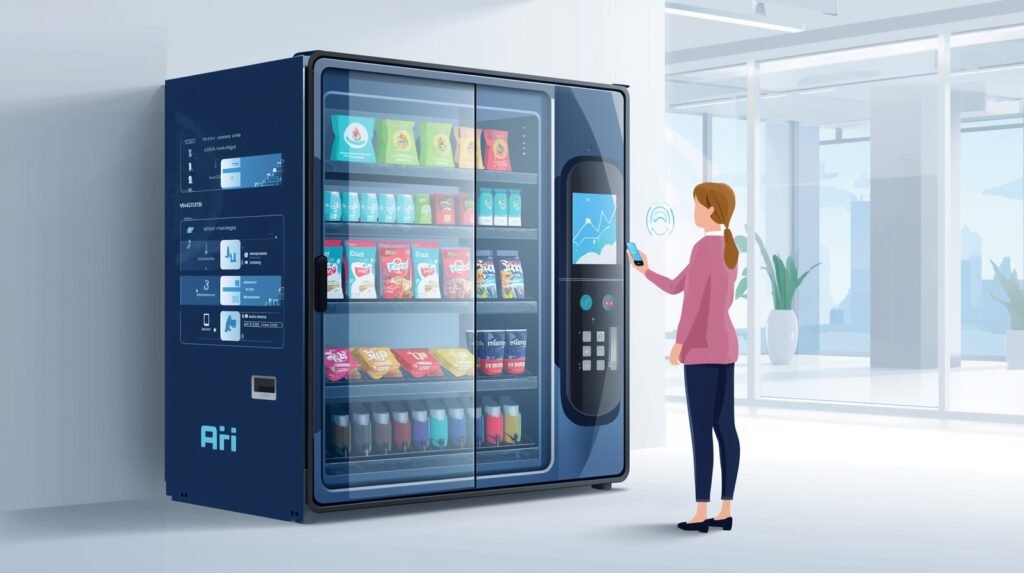
Under the hood, AI vending systems blend several technologies:
- Computer vision: Overhead or shelf‑level cameras recognize products as customers pick them up or put them back.
- Weight sensors: Smart shelves notice changes in weight to confirm which item left.
- Machine learning models: Algorithms match images and weight changes to product IDs and prices.
- Cloud analytics: A central platform aggregates sales data, predicts demand, and flags anomalies.
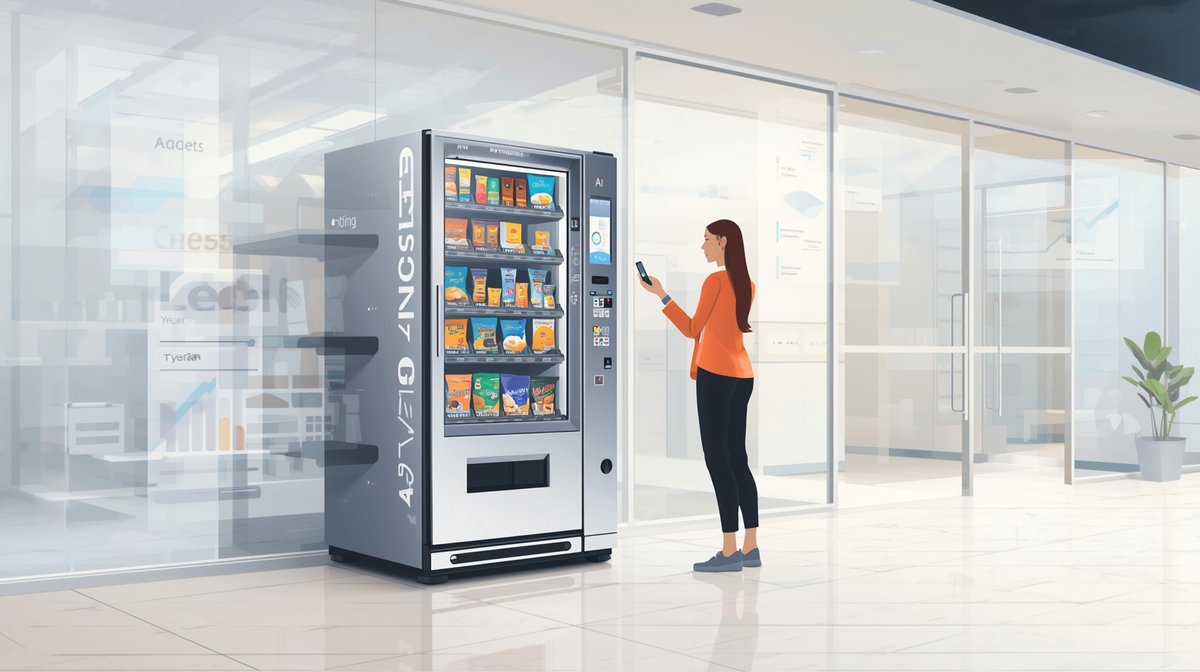
This combination allows “grab‑and‑go” doors: customers tap a card or phone to unlock the door, take what they want, close it, and get charged automatically without typing codes or pressing buttons.
AI vending machine benefits for businesses
Artificial Intelligence vending machine systems give operators smarter, more profitable self‑service retail. They track inventory in real time, optimize what to stock, reduce unnecessary service trips, and support tap‑to‑pay and mobile wallets. By using data and automation instead of guesswork, they increase sales, cut waste, and deliver a smoother customer experience than traditional vending.
More revenue from the same square footage
With rich data, you stop guessing and start optimizing. Dashboards highlight:
- Best‑selling SKUs by location, time of day, and day of week.
- Products that rarely sell and should be swapped out.
- Opportunities for upsells or bundles, like coffee plus snack combos.
In trials, some US operators have reported 20–30% sales lifts after moving to AI‑driven planograms and cashless‑first setups compared with legacy machines in the same location (VMFS USA — 2025]
Lower operating costs and fewer truck rolls
Because an AI vending machine can report real‑time stock and machine status, you can:
- Service only when certain SKUs or locations truly need attention.
- Spot failing components early through error logs and temperature alerts.
- Reduce expired stock by rotating slow movers or marking them down dynamically.
This leads to fewer unnecessary site visits and less product waste, two of the biggest cost leaks in traditional vending.
Where AI vending shines in the USA
Offices, co‑working spaces, and residential buildings
Corporate campuses and modern apartment complexes increasingly want unmanned but premium retail: better snacks, healthier options, and even tech accessories. Smart cabinets can sell salads, energy drinks, headphones, or phone chargers 24/7 in a small footprint.
In many of these spaces, building managers value the clean, “mini‑store” feel of glass‑door smart vending more than old spiral machines. Cashless and mobile payments also match the expectations of younger US workers and residents.
Hospitals, universities, and transit hubs
Hospitals need reliable access to snacks, drinks, and sometimes PPE at all hours. Universities and airports see huge peaks around lectures or flight banks. AI systems handle this better by:
- Automatically reordering fast‑moving items before they run out.
- Adjusting product mixes by season or event.
- Supporting higher‑value categories like fresh meals in secure, refrigerated cabinets.
At scale, these locations can justify the higher upfront cost because of their high daily foot traffic.
Niche concepts and high‑margin products
Beyond snacks, AI vending is being used for:
- Beauty products and skincare in malls and hotels.
- Consumer electronics and accessories in airports.
- Gym merchandise like supplements, towels, and gear.
Because the system knows exactly what was taken, shrinkage is typically lower than with open shelves, and operators can experiment with higher price points.
Costs, pricing, and ROI expectations

What an AI vending machine costs
Pricing depends heavily on features and vendor, but current ranges in the US look roughly like this:
- New AI‑enabled grab‑and‑go cabinets can run from $10,000 to $25,000 per unit before customization.
- Retrofits that add cameras and sensors to existing cabinets can be cheaper, often in the mid‑four‑figure range.
- Ongoing software and connectivity fees usually sit between $50 and $250 per month per machine, covering the cloud platform, updates, and support.
Those numbers change quickly, so always confirm with current vendor quotes.
Revenue models and payback timelines
You can run an AI vending machine in several ways:
- Own the hardware and keep 100% of product margin.
- Lease or finance the hardware over several years.
- Enter a revenue‑share with a location, splitting gross sales or profit.
A simple example: if a busy location does $3,000 per month in gross sales at 45% gross margin, you net about $1,350 before overhead. After software fees, product waste, and some labor, that might drop to $700–900. At that rate, paying off a $15,000 machine might take 18–24 months, faster if sales grow.
Steps to launch your first AI vending route
Clarify location and product strategy first
Before choosing any hardware, decide:
- Who your core customer is (office workers, students, travelers, gym members).
- What they most need: quick snacks, full meals, electronics, beauty, or mixed.
- Whether the site can support premium price points to justify smarter equipment.
Gather informal data from the location host or test with a small pilot using existing machines.
Evaluate vendors with the right questions
When you talk to AI vending providers, ask:
- How accurate is the product recognition, and how is it trained?
- What happens if the system misidentifies an item? How are refunds handled?
- What uptime do they guarantee, and how fast is support?
- Do they integrate with your payment processor or inventory system?
Request references from US operators in similar locations, not just glossy case studies.
Set up, test, and optimize after launch
Once the machine is installed:
- Start with a focused product mix instead of filling every slot.
- Run a soft launch with staff or a small audience to test the flow.
- Watch the data weekly: top sellers, dead items, peak hours.
- Adjust planograms and prices based on real performance.
Most profitable operators treat AI vending as an ongoing experiment, not a “set and forget” box.
Risks, challenges, and how to handle them
Technical issues and customer trust
Any system with cameras, sensors, and cloud software can fail. Common problems include misreads, connectivity dips, or payment glitches. To keep trust high:
- Post clear instructions and support contact info on the door.
- Make refunds quick and painless when issues occur.
- Monitor error logs and temperature alerts to fix issues before stock spoils.
The goal is for the experience to feel like a small, honest store, not a mysterious black box.
Privacy and data questions
AI vending cameras may analyze which items customers pick up or even estimate demographics to optimize offers. In the US, that means you must handle privacy carefully:
- Avoid storing identifiable video longer than needed for security or support.
- Use clear signage stating that computer vision is used and what data is collected.
- Check state‑level privacy laws, especially in California and other strict regions.
Transparent communication reduces concerns and builds long‑term relationships with hosts and customers.
FAQs
What is an AI vending machine?
An AI vending machine is a smart retail cabinet that uses cameras, sensors, and software to recognize products, track inventory, and automate checkout, often allowing grab‑and‑go shopping without pressing buttons.
How does an AI vending machine work?
Customers unlock the door with a card or phone, take items, and close it. Computer vision and weight sensors detect what left the shelves, and the system charges the correct amount through a connected payment platform.
How much does an AI vending machine cost in the USA?
In the USA, new AI vending machines typically cost from about $10,000 to $25,000 per unit, plus monthly software and connectivity fees that vary by vendor and feature set.
Are AI vending machines profitable for small businesses?
They can be profitable in high‑traffic locations with the right product mix and pricing. Real‑time data, cashless payments, and reduced stockouts often raise sales compared with traditional machines.
What products sell best in AI vending machines?
Best sellers depend on location, but common winners include drinks, snacks, ready‑to‑eat meals, and niche items like beauty products or tech accessories in the right environment.
Do AI vending machines record customers on camera?
Most systems use cameras for product recognition and security. Footage may be stored briefly, so operators should inform customers and follow privacy laws when handling any recorded data.
Can I upgrade my existing vending machine to AI?
Some vendors offer retrofit kits that add cameras and sensors to existing cabinets, turning them into smarter machines without fully replacing the hardware, though compatibility depends on your current equipment.