Search engine optimization is changing faster than ever. Traditional SEO strategies focused mainly on keywords, backlinks, and technical optimization. But today, artificial intelligence is reshaping how search engines understand content, rank pages, and deliver results.
As AI systems become deeply integrated into search engines, businesses need smarter tools to remain competitive. This is where AI SEO tools come in. These platforms use artificial intelligence to automate keyword research, analyze competitors, optimize content, and track visibility across modern search environments.
In this guide, we’ll explore the best AI SEO tools available today, how they work, and how they can help improve your brand’s visibility in AI-driven search results.
Quick Comparison: Best AI SEO Tools
| Tool | Best For | AI Feature | Pricing |
|---|---|---|---|
| Semrush | Keyword research & competitor analysis | AI SEO insights | Paid |
| Surfer SEO | Content optimization | NLP-based content scoring | Paid |
| Frase | Content research | AI content briefs | Paid |
| NeuronWriter | Semantic SEO | AI topic modeling | Freemium |
| Alli AI | SEO automation | Automated optimization | Paid |
Each platform focuses on a different aspect of artificial intelligence search engine optimization, from data analysis to automated optimization.
What Are AI SEO Tools?
AI SEO tools are platforms that use artificial intelligence to improve search engine optimization strategies. Instead of manually researching keywords, analyzing competitors, or optimizing content, these tools automate many tasks and provide data-driven recommendations.
These platforms typically use machine learning and natural language processing to analyze search engine results pages and understand ranking factors.
Common features include:
- automated keyword research
- competitor benchmarking
- AI content optimization
- SEO ranking report software
- automation for technical SEO tasks
Because of these capabilities, AI search engine optimization tools are becoming essential for marketers, bloggers, and agencies.
Why AI SEO Tools Matter in Modern Search
Search engines increasingly rely on AI systems to evaluate content quality and relevance. AI algorithms can interpret search intent, analyze content semantics, and identify patterns across millions of web pages.
This means traditional SEO tactics alone may no longer be enough.
AI SEO tools help marketers:
- analyze large datasets quickly
- optimize content for semantic relevance
- track visibility in AI-generated search results
- benchmark performance against competitors
For businesses trying to improve AI content visibility, these tools provide a major competitive advantage.
Best AI SEO Tools in 2026
Below are some of the most powerful platforms available for AI-powered SEO.
Semrush – Best for AI SEO Analytics
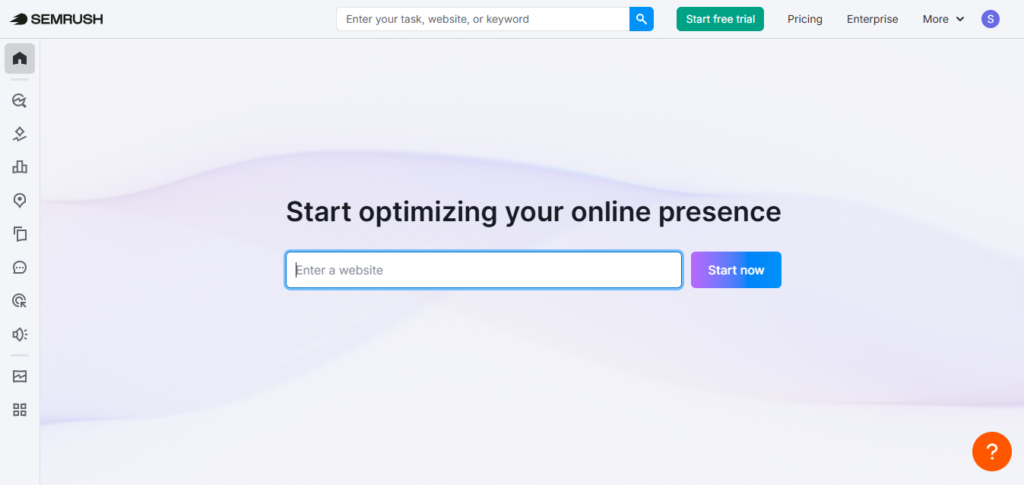
Semrush is one of the most comprehensive SEO platforms available today. It offers advanced analytics tools that help marketers track rankings, analyze competitors, and optimize content.
One of its strongest features is the Keyword Magic Tool, which allows users to discover thousands of keyword opportunities within seconds.
Key features include:
- competitor keyword analysis
- AI content optimization suggestions
- SEO ranking report software
- enterprise SEO dashboard for large teams
Semrush also provides tools to benchmark SEO performance vs competitors, making it ideal for businesses focused on growth.
For agencies and large websites, Semrush offers one of the most complete AI marketing solutions available.
Surfer SEO – Best for Content Optimization

Surfer SEO focuses on helping content creators optimize articles for search rankings.
Its AI system analyzes top-ranking pages and recommends improvements based on content structure, keyword usage, and semantic relevance.
Key capabilities include:
- real-time content scoring
- NLP keyword analysis
- competitor content benchmarking
- AI-powered optimization suggestions
Surfer is widely used by bloggers, affiliate marketers, and content teams looking to improve AI content visibility in search results.
Because it focuses heavily on content structure, it is particularly useful for long-form articles.
Frase – Best AI SEO Research Tool
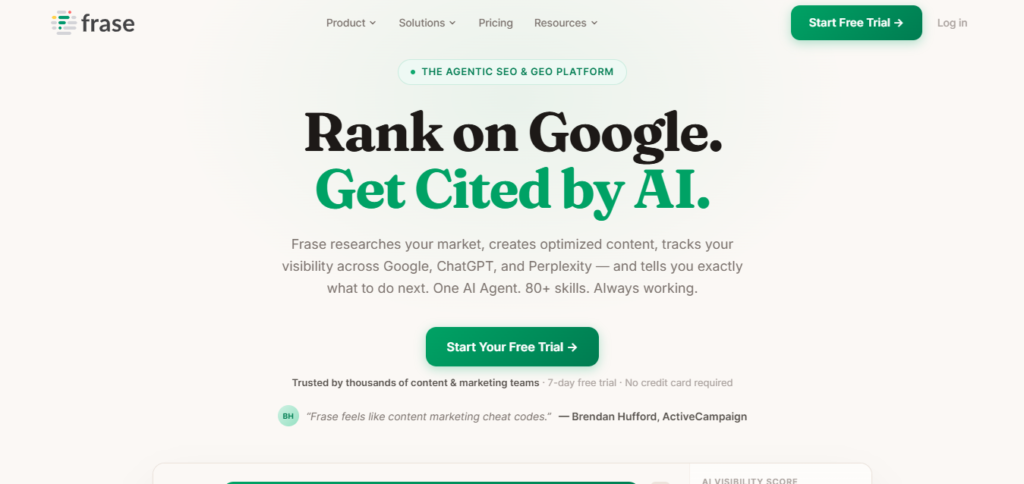
Frase is designed to simplify content research and creation. The platform uses AI to analyze search results and generate optimized content briefs.
Instead of spending hours researching competitors, users can generate structured outlines and topic recommendations instantly.
Important features include:
- automated content briefs
- SERP analysis
- AI copywriting software for drafting content
- question discovery for FAQs
For content teams that publish frequently, Frase significantly speeds up the research process.
NeuronWriter – Best for Semantic SEO
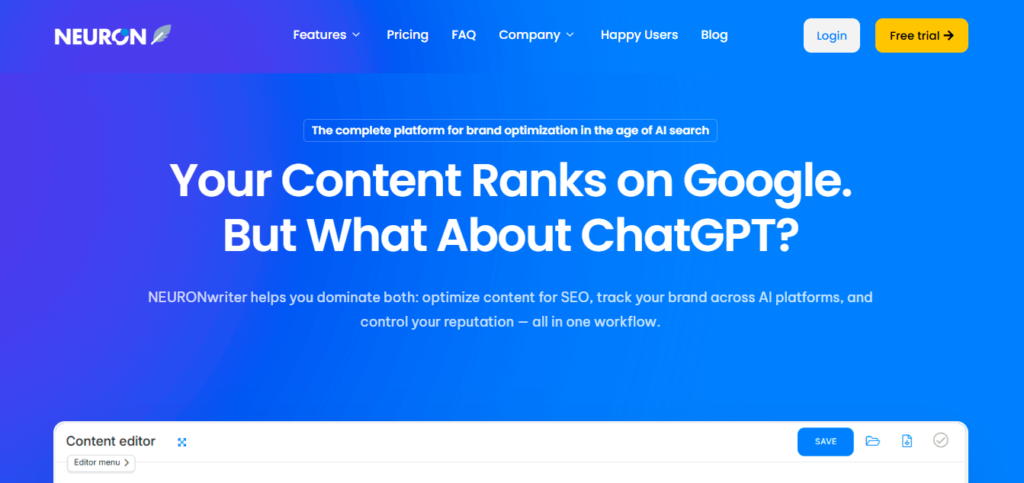
NeuronWriter focuses on semantic SEO optimization. Its AI algorithms analyze topic relationships and suggest improvements that align with search engine ranking patterns.
This helps writers produce content that covers topics more comprehensively.
Key features include:
- semantic keyword suggestions
- topic coverage analysis
- competitor benchmarking tools
- AI writing assistance
NeuronWriter is especially helpful for improving artificial intelligence search engine optimization strategies, as it ensures content covers all relevant concepts.
Alli AI – Best SEO Automation Tool
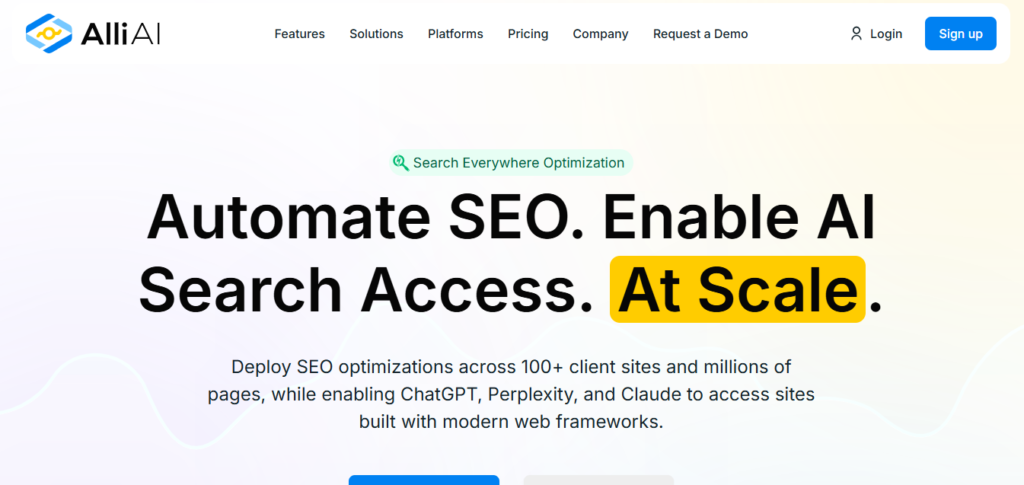
Alli AI is designed for automation. Instead of manually implementing SEO changes, this platform automatically applies optimizations across entire websites.
Important features include:
- automated technical SEO fixes
- site-wide optimization rules
- AI SEO automation tools
- real-time performance monitoring
For businesses managing large websites, Alli AI can dramatically reduce the time spent on technical optimization tasks.
Best AI SEO Tools for Specific Use Cases
Different tools work better depending on your goals.
Best AI SEO Tools for Affiliate Marketing
Affiliate marketers rely heavily on search traffic, so choosing the right tools is critical.
Recommended platforms include:
- Surfer SEO for content optimization
- NeuronWriter for semantic analysis
These tools help affiliate sites produce optimized content that ranks for competitive keywords.
Best AI SEO Tools for Social Media Optimization

AI search optimization also extends beyond traditional search engines.
Some platforms analyze how content performs across multiple channels, helping brands identify opportunities to improve visibility.
These tools help track:
- social content engagement
- keyword performance across platforms
- brand mentions in AI search results
This is particularly useful for marketers focusing on AI search optimization tools for social media.
Best AI SEO Tools for Enterprise Teams
Large companies often require advanced reporting features and team collaboration tools.
Platforms like Semrush offer an enterprise SEO dashboard that allows organizations to monitor rankings, analyze competitors, and track campaigns across multiple websites.
For businesses managing large digital ecosystems, enterprise tools are essential.
How to Choose an AI Search Optimization Platform
With so many options available, selecting the right tool requires careful consideration.
Key factors to evaluate include:
Data Accuracy
Choose platforms that provide reliable keyword and competitor data.
Automation Capabilities
AI SEO tools should automate repetitive tasks such as keyword research, content optimization, and reporting.
Competitor Analysis
Tools that allow you to benchmark AI SEO performance vs competitors are extremely valuable.
ROI Potential
Businesses should also consider which AI search optimization tools have the best ROI, balancing pricing with the potential impact on search traffic.
Which Platform Excels in AI Visibility Metrics?
AI visibility metrics measure how well your brand appears in AI-driven search results.
Some tools track:
- keyword rankings
- AI-generated search responses
- brand mentions in search results
Platforms that specialize in AI visibility metrics help businesses monitor their presence across modern search systems.
Best AI Overview Tracking Tools
AI-generated search results are becoming more common, which means brands must track how often they appear in these summaries.
The best AI overview tracking tools monitor:
- brand mentions in AI answers
- visibility in AI search summaries
- keyword ranking changes
Tracking these metrics helps marketers understand how their content performs in evolving search environments.
Tools to Benchmark AI SEO Performance vs Competitors
Competitive analysis remains one of the most important aspects of SEO.
Advanced tools allow users to compare:
- keyword rankings
- backlink profiles
- content performance
- traffic trends
By benchmarking competitors, businesses can identify opportunities to improve their own SEO strategies.
Free AI SEO Tools
Not every business has the budget for expensive SEO platforms. Fortunately, several free tools can still provide valuable insights.
Examples include:
- free keyword research tools
- open source SEO tools
- free online SEO tools lists
While these tools may lack advanced automation features, they can still support DIY SEO strategies for small websites and beginners.
How to Improve Brand Visibility in AI Search Results
Improving visibility in AI search results requires a combination of technical optimization and high-quality content.
Effective strategies include:
- creating comprehensive content covering entire topics
- using structured data markup
- building topical authority within your niche
- optimizing content for semantic relevance
Businesses that consistently publish high-quality content are more likely to appear in AI-generated search answers.
Is AI-generated content good for SEO?
AI-generated content can support SEO efforts, but it must be used carefully.
Search engines prioritize content that demonstrates expertise, authority, and trustworthiness.
Best practices include:
- editing AI-generated drafts manually
- adding original insights or research
- ensuring factual accuracy
When combined with human expertise, AI can significantly improve content production while maintaining quality.
DIY SEO Strategy Using AI Tools
Small businesses and bloggers can use AI tools to build effective SEO strategies without hiring large teams.
A simple workflow might look like this:
- research keywords using an AI SEO tool
- Analyze competitors to identify ranking opportunities
- Create optimized content using AI writing assistants
- Monitor rankings using SEO tracking tools
This DIY SEO approach allows smaller websites to compete with larger brands.
Simple SEO Reporting with AI
Modern platforms also automate reporting, making it easier to track performance.
AI-powered dashboards generate simple SEO reports that include:
- keyword ranking trends
- traffic growth
- competitor comparisons
- backlink analysis
These reports help marketers understand what strategies are working and where improvements are needed.
Final Verdict: Best AI SEO Tools Overall
AI SEO tools are transforming how businesses approach search engine optimization. Instead of manually analyzing data, marketers can now rely on intelligent systems to automate research, optimize content, and monitor performance.
Among the platforms reviewed in this guide, the top choices include:
- Semrush for comprehensive SEO analytics
- Surfer SEO for content optimization
- Frase for research and content planning
- NeuronWriter for semantic SEO improvements
- Alli AI for automated website optimization
Each tool offers unique advantages depending on your SEO strategy.
Frequently Asked Questions
What are the best AI SEO tools?
Some of the most popular AI SEO tools include Semrush, Surfer SEO, Frase, NeuronWriter, and Alli AI. These platforms provide advanced keyword research, content optimization, and automation features.
Which AI search optimization tools have the best ROI?
Tools that combine multiple features, such as keyword research and competitor analysis, often deliver the highest return on investment.
Are free AI SEO tools effective?
Free tools can still provide valuable insights, particularly for beginners or small websites, although they may lack advanced automation capabilities.
How do AI SEO tools improve rankings?
These platforms analyze search results, identify ranking factors, and recommend improvements that help websites produce better optimized content.