
Artificial intelligence has rapidly transformed how developers write, debug, and optimize code. From generating simple scripts to assisting with large software architecture decisions, AI coding assistants are now part of everyday developer workflows. Two of the most talked-about tools in this space are Claude and ChatGPT. Both are powerful, large language models designed to understand natural language and generate useful outputs—including code.
But the question many developers are asking today is simple: Is Claude better than ChatGPT for coding?
The answer is not as straightforward as choosing one tool over the other. Both models have different strengths, different ecosystems, and different use cases. Some developers prefer Claude because of its strong reasoning and ability to process large codebases, while others rely on ChatGPT because of its integrations, plugins, and mature developer ecosystem.
In this in-depth comparison, we will analyze how Claude and ChatGPT perform in real coding environments. We will explore accuracy, context handling, code generation quality, debugging ability, supported programming languages, and real-world developer workflows. By the end of this guide, you will clearly understand which AI assistant works best for your coding needs.
Understanding Claude and ChatGPT
Before comparing their coding capabilities, it is important to understand what Claude and ChatGPT actually are.
Claude is an AI model developed by Anthropic, a company focused on building safe and reliable AI systems. Claude models are designed with strong reasoning abilities and large context windows. This allows them to analyze large documents, long conversations, and even entire codebases.
ChatGPT, on the other hand, is developed by OpenAI. It is one of the most widely used AI tools in the world and powers many coding tools, such as GitHub Copilot integrations, plugins, and developer APIs.
Both tools are capable of generating code, explaining algorithms, fixing bugs, reviewing software architecture, and helping developers learn new programming languages. However, their strengths differ depending on the task.
Can ChatGPT Code?

One of the most common questions developers ask is: Can ChatGPT code?
The answer is yes. ChatGPT is extremely capable at writing and explaining code across many programming languages.
Developers use ChatGPT for tasks such as:
- Writing Python scripts
- Generating JavaScript functions
- Building HTML and CSS layouts
- Creating SQL queries
- Debugging existing code
- Explaining programming concepts
ChatGPT can also act as an AI JavaScript generator, helping developers quickly create front-end functions or UI logic. Many developers use it as a quick prototyping tool when building web applications.
Another advantage of ChatGPT is its ability to explain code line by line. This makes it especially useful for beginner programmers who want to understand how algorithms work.
However, ChatGPT can sometimes struggle with very large codebases or long conversations about complex projects. This is where Claude begins to stand out.
What Makes Claude Unique for Coding

Claude has gained significant attention among developers because of its powerful reasoning abilities and extremely large context window.
In practical terms, this means Claude can analyze much larger pieces of code in a single interaction. Developers can paste thousands of lines of code and ask Claude to analyze them, summarize them, or suggest improvements.
This makes Claude particularly useful for tasks like:
- Reviewing entire repositories
- Understanding legacy code
- Performing an AI-based code review
- Identifying architecture problems
- Refactoring complex systems
Claude also performs very well when developers ask questions like “what is wrong with this code” or request a code quality check across multiple files.
Because of its strong reasoning, Claude often produces detailed explanations and thoughtful suggestions rather than just generating code quickly.
Claude Code and AI Coding Agents
One of the most interesting developments in the AI programming ecosystem is the rise of code agents.
A code agent is an AI tool that can interact with files, analyze a project structure, and make edits automatically.
Claude introduced tools such as Claude Code, which allow developers to interact with their projects in a more automated way. Instead of just asking questions, developers can ask the AI to:
- Read project files
- Suggest improvements
- Refactor functions
- Write tests
- Fix bugs
This agent-based approach is becoming increasingly popular because it allows AI to function more like a real development assistant.
Developers who work on large software systems often find this capability extremely valuable.
Which Version of ChatGPT Is Best for Coding?
Another question developers frequently ask is: Which version of ChatGPT is best for coding?
Different ChatGPT models have different strengths. Some models are optimized for reasoning, while others focus on speed and general knowledge.
For coding tasks, developers generally prefer the most advanced models available because they provide:
- Better logical reasoning
- Improved debugging capabilities
- More accurate code generation
- Better context understanding
Advanced models also perform better when generating structured code like APIs, database schemas, and multi-file applications.
In professional environments, developers often combine ChatGPT with tools like GitHub Copilot or integrated development environments (IDEs) to improve productivity.
Claude vs ChatGPT for Python Development
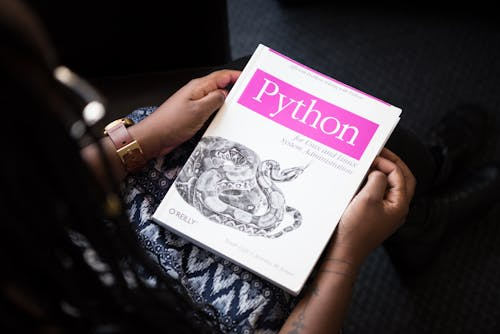
Python remains one of the most popular programming languages in the world, especially in fields like machine learning, automation, and data science.
Both Claude and ChatGPT perform very well when used as an AI for coding Python.
ChatGPT is often preferred for quick tasks such as:
- Writing simple scripts
- Generating automation tools
- Creating data processing functions
Claude, however, often excels when dealing with larger Python projects.
For example, developers working on machine learning pipelines or backend services sometimes prefer Claude because it can analyze longer scripts and suggest architectural improvements.
In practice, both tools can significantly speed up Python development workflows.
AI Code Review and Code Quality Analysis
One area where AI tools are becoming extremely valuable is AI-based code review.
Traditionally, developers review each other’s code before merging it into production. This process ensures that code is clean, secure, and follows best practices.
AI tools like Claude and ChatGPT can now assist with this process.
They can perform tasks such as:
- Detecting inefficient logic
- Identifying security vulnerabilities
- Suggesting performance improvements
- Improving readability and structure
Claude is often praised for its ability to perform deep code quality checks across large files.
ChatGPT, meanwhile, is very effective at suggesting quick fixes and improvements for smaller sections of code.
Using both tools together can dramatically improve code quality.
AI Code Assistants for Software Development
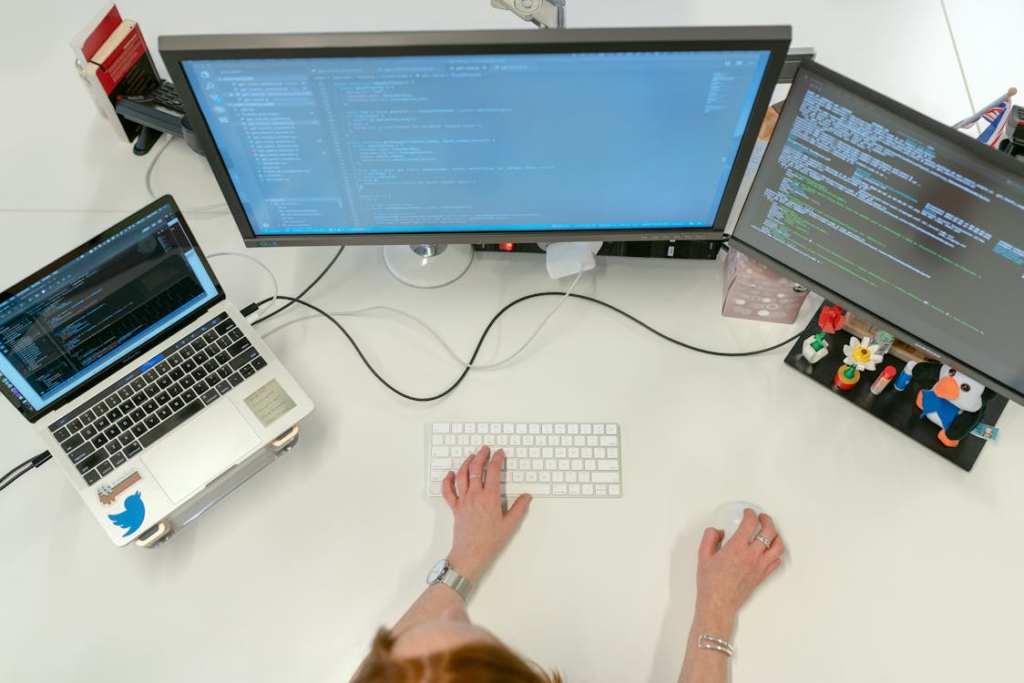
AI is not replacing developers. Instead, it is becoming a powerful assistant.
Today, many developers rely on AI as part of their daily workflow.
Typical tasks include:
- Generating boilerplate code
- Fixing bugs
- Writing documentation
- Explaining complex algorithms
- Creating unit tests
AI coding assistants are especially useful for reducing repetitive tasks. This allows developers to focus on solving more complex problems.
For software teams, adopting the best AI for software development can lead to major productivity gains.
However, developers must still review AI-generated code carefully before using it in production.
Claude AI Alternatives
While Claude and ChatGPT dominate the conversation, they are not the only AI tools available.
Several Claude AI alternatives exist in the coding space.
Some popular options include:
Each tool has different strengths. Some focus on real-time code completion, while others emphasize full-project reasoning.
Many professional developers experiment with multiple tools before choosing one that fits their workflow.
AI Design-to-Code Tools
Another rapidly growing category is design-to-code AI tools.
These tools convert design files or screenshots into working code.
Developers often ask: What is the best design for a code tool?
Some AI platforms can now generate HTML, CSS, and JavaScript directly from UI designs.
This dramatically reduces development time for front-end engineers and designers.
ChatGPT is often used to convert UI descriptions into code, while Claude can analyze the structure and suggest improvements.
The Role of AI Code Optimizers
Another useful feature offered by modern AI assistants is code optimization.
A code optimizer analyzes existing code and suggests ways to improve performance.
For example, AI tools can:
- Reduce algorithm complexity
- Optimize database queries
- Improve memory usage
- Suggest better data structures
This is particularly useful when developers are working on high-performance applications.
Both Claude and ChatGPT can perform optimization tasks, but Claude’s long context capability sometimes allows it to analyze entire modules at once.
Is Claude Worth It?
Many developers evaluating AI tools eventually ask: Is Claude worth it?
The answer depends on how you plan to use it.
Claude may be worth it if you:
- Work on large codebases
- Need detailed reasoning and analysis
- Want AI assistance for architecture decisions
ChatGPT may be the better option if you:
- Need fast answers and quick code snippets
- Use many integrations and plugins
- Prefer an AI tool with a large ecosystem
For many developers, the best strategy is not choosing one tool but combining both.
The Future of AI Coding Assistants
AI coding tools are improving rapidly. New models are released frequently, and each generation becomes more capable.
Future AI assistants may soon be able to:
- Build complete applications
- Automatically test software
- Detect vulnerabilities before deployment
- Optimize entire codebases
Developers will increasingly work alongside AI systems rather than coding entirely manually.
The most successful developers will be those who learn how to use AI tools effectively while maintaining strong programming fundamentals.
Final Verdict: Is Claude Better Than ChatGPT for Coding?
So, is Claude better than ChatGPT for coding?
The reality is that both tools excel in different areas.
Claude tends to perform better when analyzing large codebases and performing deep reasoning tasks. Its long context window allows it to understand complex projects more effectively.
ChatGPT, however, remains incredibly powerful for rapid development, quick debugging, and generating code snippets across many programming languages.
For many developers, the smartest approach is to use both tools strategically. ChatGPT can accelerate everyday coding tasks, while Claude can assist with deeper analysis and project-level reasoning.
AI coding assistants are no longer optional tools—they are becoming essential components of modern software development.
And as these models continue to evolve, the gap between human developers and AI assistants will continue to shrink, unlocking entirely new possibilities for how software is built.
FAQs
Q1: Is Claude better than ChatGPT for coding?
Claude often outperforms for long-horizon, multi-file engineering tasks; ChatGPT is stronger for IDE suggestions and quick prototyping.
Q2: Which model should I pick for Python?
Test both; Claude is strong on complex refactors, while ChatGPT/Copilot speeds up Python dev with inline suggestions.
Q3: Can ChatGPT run code in my repo like Claude Code?
ChatGPT powers tools like Copilot, and agentic repo-level editing is more mature in Claude Code’s product today.
Q4: Is Claude worth it for teams?
If your team does large refactors or needs agentic automation, Claude can be worth it; evaluate on pilot metrics (time saved vs. cost).
Q5: How do I prevent AI-generated errors?
A5: Use CI, unit tests, manual code review, and sandboxed runs for any AI-suggested infra or destructive command.