
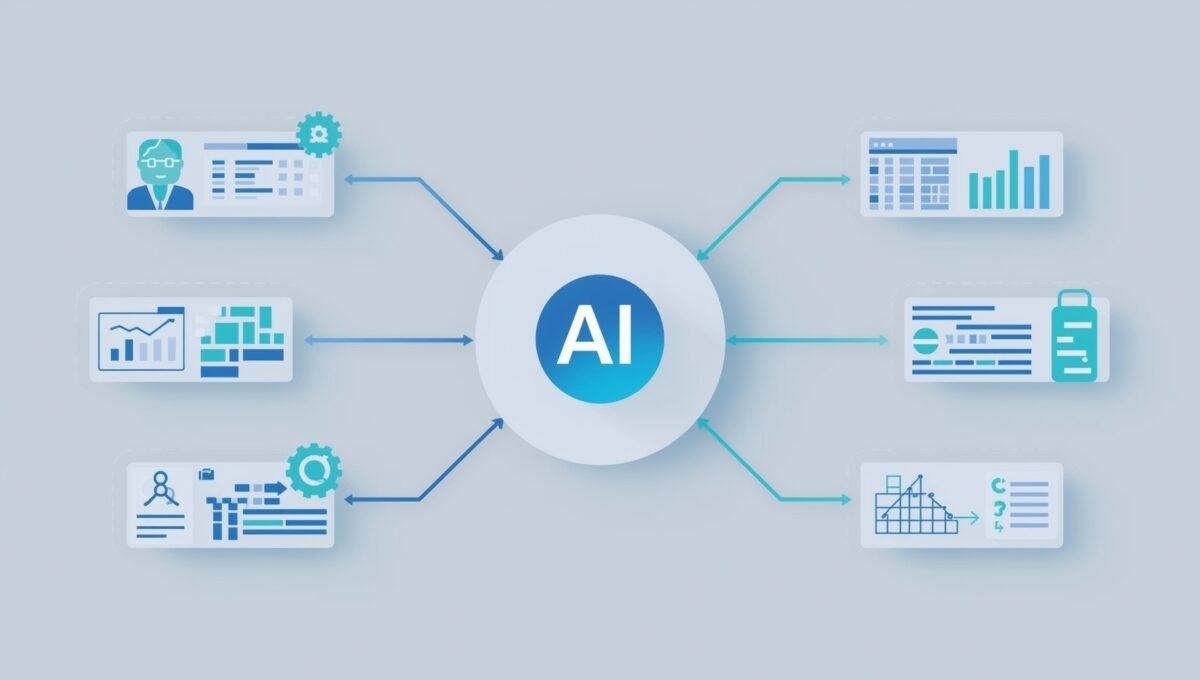
You’re building an AI agent that needs real-time information from the web, but traditional search APIs return cluttered results that your LLM struggles to process effectively. Your RAG system chokes on irrelevant data. Your AI assistant gives outdated answers because it can’t access current information. Sound familiar?
This frustration drives thousands of developers toward specialized solutions designed specifically for AI applications. Tavily API emerges as a purpose-built search engine that delivers clean, structured, real-time web data optimized for large language models and AI agents. Unlike traditional search APIs that dump raw web content, Tavily API provides pre-processed, contextually relevant information that seamlessly integrates with your AI workflows, enabling your applications to access current web information without the complexity of data cleaning and relevance filtering.
What Is Tavily API and Why It Matters for AI Development
Tavily API represents a fundamental shift in how AI applications access and process web information. Rather than adapting traditional search engines for AI use cases, Tavily was built from the ground up to serve the specific needs of large language models, AI agents, and retrieval-augmented generation systems that require clean, structured, and contextually relevant data from the web.
The platform addresses a critical gap in the AI development ecosystem where traditional search APIs provide too much noise and too little signal for effective AI integration. When you query Google’s Custom Search API or similar services, you receive raw HTML, mixed content quality, and results that require extensive post-processing before they’re useful for LLM consumption. This processing overhead creates latency, complexity, and reliability issues that can cripple AI applications requiring real-time information.
Tavily API transforms this experience by implementing intelligent content filtering, relevance scoring, and structured output formatting specifically designed for AI consumption. The service automatically extracts key information, filters out advertisements and irrelevant content, and presents results in formats that LLMs can immediately utilize without additional preprocessing steps. This approach significantly reduces the engineering overhead required to build AI applications that need current web information.
The platform’s architecture reflects a deep understanding of how modern AI systems actually consume and process information. Unlike search engines designed for human browsing, Tavily API optimizes for machine readability, semantic relevance, and integration efficiency. This specialization makes it particularly valuable for developers building sophisticated AI agents, chatbots with current information needs, and RAG systems requiring high-quality external data sources.
Understanding why Tavily API matters requires recognizing the limitations of existing solutions in AI contexts. Traditional search APIs were designed for human consumption, web scraping introduces legal and technical complexities, and general-purpose APIs often lack the contextual intelligence needed for effective AI integration. Tavily API bridges this gap by providing a service specifically engineered for the unique requirements of AI applications.
Comprehensive Feature Analysis and Technical Architecture
Tavily API implements a sophisticated technical stack designed to optimize web search results specifically for artificial intelligence applications. The platform’s core architecture focuses on intelligent content extraction, relevance optimization, and seamless integration with popular AI development frameworks, including LangChain and LlamaIndex.
The search capabilities extend beyond simple keyword matching to include semantic understanding and contextual relevance scoring. When your application queries the Tavily API, the system analyzes search intent, identifies authoritative sources, and applies content filtering algorithms designed to surface information that directly addresses the query context. This approach significantly improves result quality compared to traditional search APIs that rely primarily on keyword density and link popularity.
Content processing represents one of Tavily API’s most valuable technical features. The platform automatically extracts clean text from web pages, removes advertisements and navigation elements, and structures information in formats optimized for LLM consumption. This preprocessing eliminates the need for custom scraping and cleaning solutions that typically consume significant development resources and introduce maintenance overhead into AI applications.
The API’s response format includes structured metadata that enables sophisticated result ranking and filtering within your applications. Each search result contains relevance scores, content categorization, source credibility indicators, and extracted key information that helps your AI systems make informed decisions about information utilization. This metadata richness distinguishes Tavily API from simpler search services that provide minimal result context.
Real-time capabilities ensure that your AI applications access current information rather than cached or outdated content. Tavily API’s infrastructure maintains fresh indexes and implements efficient content discovery mechanisms that capture new information as it appears across the web. This freshness becomes critical for AI applications handling time-sensitive queries or operating in rapidly evolving information environments.
Integration flexibility accommodates various development approaches through comprehensive API endpoints, official Python libraries, and framework-specific implementations. Whether you’re building custom AI agents, implementing RAG systems, or developing LLM applications, Tavily API provides integration options that align with your existing technical architecture and development preferences.
Tavily API Implementation and Integration Guide

Getting started with Tavily API requires understanding both the technical integration process and the strategic considerations for optimal implementation within your AI application architecture. The platform provides multiple integration pathways designed to accommodate different development approaches and technical requirements.
The fundamental integration process begins with obtaining your Tavily API key through the platform’s developer portal. The service offers generous free tier allocations with 1,000 monthly credits for personal use, making it accessible for experimentation and small-scale applications. Understanding the credit system helps optimize your usage patterns and control costs as your application scales.
Python integration represents the most streamlined implementation path for most AI developers. The official tavily-python library provides high-level abstractions that simplify common search operations and handle authentication automatically. Installing the library through pip and configuring your API key enables immediate access to Tavily’s search capabilities within your existing Python AI applications.
Direct API integration offers maximum flexibility for developers using other programming languages or requiring custom implementation approaches. The RESTful API endpoints accept standard HTTP requests and return JSON-formatted responses that can be processed by virtually any programming environment. This flexibility makes Tavily API accessible regardless of your preferred development stack or deployment environment.
LangChain integration deserves special attention because of its popularity in the AI development community. Tavily API includes native LangChain tool implementations that enable seamless incorporation into existing LangChain applications. This integration allows your AI agents to access real-time web information through familiar LangChain patterns without requiring custom wrapper development or complex configuration procedures.
RAG system integration focuses on optimizing information retrieval for context augmentation in large language model applications. Tavily API’s structured response format aligns naturally with RAG architectures, providing clean content chunks that can be directly embedded into vector databases or used as context for LLM queries without additional processing steps.
Performance optimization requires understanding Tavily API’s response characteristics and implementing appropriate caching and batching strategies. The platform’s response times and content quality make it suitable for interactive applications, but implementing intelligent caching reduces API calls and improves user experience while controlling costs in production environments.
Pricing Analysis and Cost Optimization Strategies

Understanding Tavily API pricing structure helps developers make informed decisions about implementation approaches and usage optimization strategies. The platform implements a credit-based pricing model where different operations consume varying amounts of credits based on complexity and resource requirements.
The free tier provides 1,000 credits per month for personal use, which translates to substantial search capabilities for development, testing, and small-scale applications. This allocation enables thorough evaluation of the platform’s capabilities without financial commitment, making it accessible for individual developers and small teams exploring AI search integration possibilities.
Credit consumption varies based on search complexity, result depth, and content processing requirements. Basic search operations typically consume fewer credits than advanced searches requiring deep content analysis or specialized filtering. Understanding these consumption patterns helps optimize query strategies and maximize the value derived from your credit allocation.
Paid tier options scale from individual developer needs to enterprise requirements, with pricing structures designed to accommodate different usage patterns and application scales. The platform offers volume discounts and custom enterprise pricing for applications requiring significant search capabilities or specialized support requirements.
Cost optimization strategies focus on intelligent query design, result caching, and usage pattern analysis. Implementing query optimization reduces unnecessary API calls, while strategic caching minimizes redundant searches for similar information. Monitoring usage patterns helps identify optimization opportunities and prevents unexpected cost escalation as applications scale.
Budget planning for Tavily API integration should consider both direct API costs and indirect savings from reduced development complexity. While the service represents an additional operational expense, it eliminates the need for custom search infrastructure, content processing systems, and maintenance overhead that would otherwise consume significant development resources.
ROI calculations should factor in development time savings, improved application quality, and reduced infrastructure complexity when evaluating Tavily API against alternative approaches. For many AI applications, the service provides positive ROI through faster development cycles and improved user experiences that justify the operational costs.
Tavily API vs Alternative Search Solutions
Comparing Tavily API to alternative search solutions requires evaluating multiple dimensions including AI optimization, integration complexity, content quality, and cost effectiveness. Understanding these comparisons helps developers make informed decisions about which search solution best serves their specific AI application requirements.
Google Custom Search API represents the most common alternative, offering extensive web coverage and mature infrastructure. However, Google’s service lacks AI-specific optimizations and returns raw HTML content that requires significant post-processing for effective LLM integration. The additional development overhead for content cleaning and relevance filtering often makes Google Custom Search less efficient for AI applications despite its lower direct costs.
SerpAPI and similar search result APIs provide structured access to search engine results but focus on replicating human search experiences rather than optimizing for AI consumption. These services excel at providing comprehensive search result metadata but lack the content processing and AI-specific filtering that makes Tavily API particularly valuable for LLM applications.
Web scraping solutions offer maximum control over content acquisition but introduce legal, technical, and maintenance complexities that consume significant development resources. Building custom scraping infrastructure requires expertise in anti-bot technologies, content parsing, and site-specific adaptations that make this approach impractical for most AI development teams.
Bing Search API provides Microsoft’s alternative to Google’s search capabilities with similar integration approaches and content formats. Like Google’s offering, Bing Search API lacks AI-specific optimizations and requires custom content processing for effective LLM integration, though it may offer different pricing structures or geographic coverage advantages.
Tavily API’s specialization in AI applications provides distinct advantages in content quality, integration simplicity, and result relevance for LLM consumption. While other solutions may offer lower direct costs or broader feature sets, Tavily’s focus on AI use cases often provides better total cost of ownership when development time and infrastructure complexity are considered.
The choice between alternatives depends on specific application requirements, development team capabilities, and budget constraints. Applications requiring maximum customization might benefit from custom scraping solutions, while those prioritizing rapid development and AI optimization typically find greater value in Tavily API’s specialized approach.
Best Practices and Advanced Implementation Techniques
Implementing Tavily API effectively requires understanding both technical best practices and strategic approaches that maximize the platform’s value within your AI application architecture. These practices focus on optimizing performance, controlling costs, and ensuring reliable integration that scales with your application’s growth.
Query optimization represents the foundation of effective Tavily API usage. Crafting precise, contextually rich queries improves result relevance while reducing credit consumption. Instead of generic keyword searches, effective queries include context, intent, and specific information requirements that help Tavily’s algorithms identify the most relevant sources and content sections.
Result processing strategies should balance comprehensiveness with efficiency. While Tavily API returns pre-processed content suitable for immediate LLM consumption, implementing additional filtering and ranking based on your application’s specific needs can further improve result quality. This might include domain-specific relevance scoring, content freshness weighting, or source authority evaluation.
Caching implementation reduces API calls and improves response times for repeated queries. Implementing intelligent caching that considers query similarity, content freshness requirements, and user context helps optimize both costs and user experience. Cache invalidation strategies should balance performance benefits with information currency requirements specific to your application domain.
Error handling and fallback mechanisms ensure robust application behavior when API requests fail or return insufficient results. Implementing graceful degradation, retry logic, and alternative information sources maintains application functionality even during service disruptions or when search results don’t meet quality thresholds.
Rate limiting and usage monitoring prevent unexpected cost escalation and ensure consistent application performance. Implementing usage tracking, alert systems, and automatic throttling helps maintain cost control while providing visibility into application search patterns and optimization opportunities.
Security considerations include API key management, request logging, and result sanitization. Protecting API credentials, monitoring usage for unauthorized access, and validating search results before LLM consumption help maintain application security and prevent potential vulnerabilities from external content sources.
Expert Assessment and Industry Adoption
Industry experts and early adopters provide valuable insights into Tavily API’s practical performance and strategic value within AI development workflows. These perspectives help evaluate the platform’s maturity, reliability, and long-term viability for production AI applications.
Developer feedback consistently highlights Tavily API’s ease of integration and immediate value for AI applications requiring current web information. The platform’s focus on AI-specific optimization resonates with developers who have struggled with adapting traditional search APIs for LLM consumption. Integration simplicity and result quality emerge as primary advantages in community discussions.
Enterprise adoption patterns indicate growing recognition of Tavily API’s value for business AI applications. Organizations building customer service chatbots, research assistants, and decision support systems report significant improvements in application quality and reduced development complexity when incorporating Tavily API for real-time information access.
Performance benchmarks from independent evaluations demonstrate Tavily API’s advantages in result relevance and content quality compared to traditional search APIs. These studies typically show higher precision in AI-relevant results and reduced processing overhead for LLM integration, validating the platform’s specialized approach to AI search optimization.
Competitive positioning analysis suggests Tavily API occupies a unique market position focused specifically on AI application needs. While traditional search APIs serve broader markets and custom solutions offer maximum flexibility, Tavily’s specialization creates distinct value for the growing AI development community.
Long-term viability considerations include the platform’s funding, technical roadmap, and market adoption trajectory. Early indicators suggest strong developer interest and growing enterprise adoption, though the platform’s relatively recent market entry requires ongoing evaluation of sustainability and feature development consistency.
Integration ecosystem development shows positive momentum with official support for popular AI frameworks and growing community contributions. This ecosystem growth indicates healthy platform adoption and suggests continued improvement in integration options and developer tools.
Conclusion
This comprehensive analysis reveals that Tavily API addresses a critical gap in AI development infrastructure by providing search capabilities specifically optimized for large language models and AI agents. The platform’s focus on content quality, integration simplicity, and AI-specific optimization creates distinct advantages over traditional search solutions that were designed for human consumption rather than machine processing.
The question of whether to integrate Tavily API into your AI application depends on your specific requirements for real-time web information, development timeline constraints, and budget considerations. Applications requiring current information with minimal development overhead typically benefit significantly from Tavily’s specialized approach, while those with unique requirements might need custom solutions or alternative approaches.
Understanding Tavily API’s capabilities, limitations, and best practices empowers developers to make informed decisions about search integration strategies. The platform represents a maturing solution in the rapidly evolving AI infrastructure landscape, offering immediate value while continuing to evolve with developer needs and technological advancement.
For comprehensive resources on AI search integration, LLM optimization techniques, and advanced RAG implementation strategies, you can also read these related resources that provide detailed guidance on building robust AI applications with external data sources.
- Is Janitor AI Safe? Complete User Guide 2025
- Best AI spreadsheet tool for combining numbers on spreadsheets free
FAQs
How does Tavily API work?
Tavily API processes web search queries through AI-optimized algorithms that extract clean, relevant content specifically formatted for large language model consumption, eliminating the need for manual content processing and filtering.
What are the 4 types of API?
The four main API types are REST APIs for web services, GraphQL APIs for flexible data queries, SOAP APIs for enterprise applications, and WebSocket APIs for real-time communication, though this applies to general API architecture rather than Tavily specifically.
Is Tavily AI free to use?
Tavily API offers a generous free tier with 1,000 monthly credits for personal use, with paid plans available for higher usage volumes and commercial applications requiring additional credits and features.