
Google Play says PolyBuzz, the chat app most people mean when they type “poly ai”, shares your precise location with other companies. Apple’s listing for the same app, from the same developer, says the only thing it collects is a device identifier, and that even that isn’t linked to you. Both labels were live when we read them on 13 October 2026. They can’t both be right.
That gap is why our verdict on the PolyBuzz chat app is Caution. It’s a real and hugely popular app, not a scam, but it’s an 18+ product guarded by a birthday box, it refuses refunds, and its privacy disclosures don’t agree with each other. There’s a second Poly AI as well: PolyAI, a London company whose voice bots answer customer service calls for big brands. For someone who simply phones one of those lines, we rate it Verified, with one caveat about recordings that we explain further down.
Which Poly AI are you asking about?
The name covers two unrelated businesses. Bing’s keyword data shows which one most people want: the searches that sit next to “poly ai” are nearly all spellings of PolyBuzz (poly buzz, pollybuzz, polibuzz), along with Character AI and Talkie. A much smaller set, like “poly ai compliance policy”, is about the enterprise company.
| PolyBuzz (the chat app) | PolyAI (the voice agent firm) | |
|---|---|---|
| What it does | Role-play chats with AI characters, many made by other users, with voice replies | Voice assistants that answer phone calls for businesses |
| Who runs it | Cloud Whale Interactive Technology LLC on both app stores; the website’s legal pages name Singularity Mutual Entertainment Culture Media Limited in Hong Kong | PolyAI Limited, a spin-out from the University of Cambridge |
| How you meet it | You install it | You call a company that uses it |
| Age rating | 18+ (App Store), Mature 17+ (Google Play) | Not a consumer app |
| Our verdict | Caution | Verified |
Is PolyBuzz safe? Three documents, three answers
We read the App Store listing, the Google Play Data safety page and PolyBuzz’s own privacy policy (last updated 1 June 2026) on the same morning. This is what each says about the data that matters most.
| Data | App Store label | Google Play label | Privacy policy |
|---|---|---|---|
| Location | Not listed | Approximate and precise location, shared with other companies | Precise geolocation, listed among the permissions used “to train our AI algorithm” |
| Chats and photos | Not listed | User-generated content and photos collected | Typed text and uploaded pictures collected; photos may be used for AI training |
| Voice | Not listed | Voice or sound recordings collected | Microphone used for voice input |
| Contacts | Not listed | Not listed | Contacts collected so you can find friends on PolyBuzz |
| Tracking | Identifiers used to track you across other companies’ apps | Device IDs collected | Ad networks (TopOn is named) may use your advertising ID, location and IP address |
The policy also names ChatGPT’s platform among the third parties that receive user information to make the service work. It gives no retention period for chats and doesn’t say which countries hold the data, only that it may be processed outside your own.
None of this proves PolyBuzz misuses anything. Store labels are written by the developer and neither Apple nor Google checks them line by line. But when a company tells Google it shares precise location and tells Apple it collects nothing tied to you, neither label is a safe basis for a decision. Plan around the stricter one.
Two permissions you can switch off today
Location and contacts aren’t needed to chat. The policy ties location to a more “local” chat experience and to training, and contacts to finding friends. On an iPhone, open Settings, scroll to PolyBuzz, and set Location to Never and Contacts off. On Android, open Settings, Apps, PolyBuzz, Permissions, and set both to Don’t allow. The policy also says California residents can turn off ad-related data sharing from the app’s settings; we couldn’t see that screen without signing up, so we can’t confirm where the switch sits.
The age check is a birthday box, unless you live in the UK
Apple rates PolyBuzz 18+ and lists sexual content or nudity as a frequent theme. Google Play rates it Mature 17+. The privacy policy says under-18s are denied access. The check, though, is the date of birth you type the first time you open the app. Guests can’t change it afterwards, and PolyBuzz says it may suspend anyone whose birthday turns out to be false.
Real verification only shows up for the UK. The policy names Ondato and Yoti as the providers it uses to meet the Online Safety Act, and says it keeps the pass or fail result rather than your ID. For US users, nothing we read describes more than the typed date. That’s the same pattern we found when we asked whether Janitor AI is safe: an adult app whose age gate a determined teenager can walk straight through.
One small inconsistency while you’re reading: the policy’s California section talks about children under 17, while every other section draws the line at 18.
What PolyBuzz costs, and why the weekly plan is the costly one
The app is free with ads. The US App Store lists four subscriptions and two in-app currencies, Coins and Opals. Here’s what each plan adds up to if you forget about it for a year.
| Plan | Price | Kept for a year |
|---|---|---|
| Poly Standard Weekly | $4.99 a week | $259.48 |
| Poly Standard Monthly | $9.90 a month | $118.80 |
| Poly Premium Monthly | $19.90 a month | $238.80 |
| Poly Ultimate Monthly | $29.90 a month | $358.80 |
Same Standard tier, more than twice the yearly cost on the weekly plan. Coins run from $2.49 for 1,000 to $9.99 for 8,000, and Opals from $2.49 for 500 to $19.90 for 4,000. Neither store page explains what each currency buys, and we didn’t pay to find out.
The terms of use (also dated 1 June 2026) are blunt. Plans renew until you cancel them before the last day of the period. Payments aren’t refunded, even after a subscription is cancelled, and a child’s accidental purchase isn’t treated as grounds for a refund either. Disputes go to individual arbitration at the New York International Arbitration Center under Delaware law, with a class-action waiver. The clause mentions opting out, yet the terms we read never say how. If you paid through Apple or Google, their own refund request pages are the realistic route.
Is PolyBuzz a scam? What users report
It isn’t. The app works and it’s enormous: 4.4 stars from about 484,000 ratings on the US App Store, and 4.0 from about 1.19 million reviews on Google Play, where it shows 50M+ downloads. Store ratings mostly come from people who enjoy the characters.
Trustpilot tells a smaller, angrier story: 2.2 from 23 reviews when we checked, on an unclaimed profile with no company replies. The complaints repeat. Long ads on the free tier. A paid memory feature buyers say doesn’t work. Card charges people had to dispute. Reviewers saying children can reach adult chats. Twenty-three reviews can’t measure anything, so treat them as examples of what goes wrong.
How to cancel PolyBuzz and delete your account
- On an iPhone: Settings, tap your name, Subscriptions, PolyBuzz, Cancel Subscription. Deleting the app doesn’t stop the charge.
- On Android: open Google Play, tap your profile picture, Payments and subscriptions, Subscriptions, PolyBuzz, Cancel.
- Do it before the last day of the current period. The terms bill you on every renewal until you cancel.
- To close the account, go to Setting, then Account, then Delete inside the app. The policy says this can’t be undone and that copies in backups may survive until the backup system is updated.
- For a copy of your data or a deletion request by email, write to [email protected]. The policy says replies generally come within 30 days of an identity check.
We matched these steps to the store menus and PolyBuzz’s policy on 13 October 2026. Apps move buttons around, so look for the same words if your screen differs.
PolyAI, the Poly AI that answers the phone

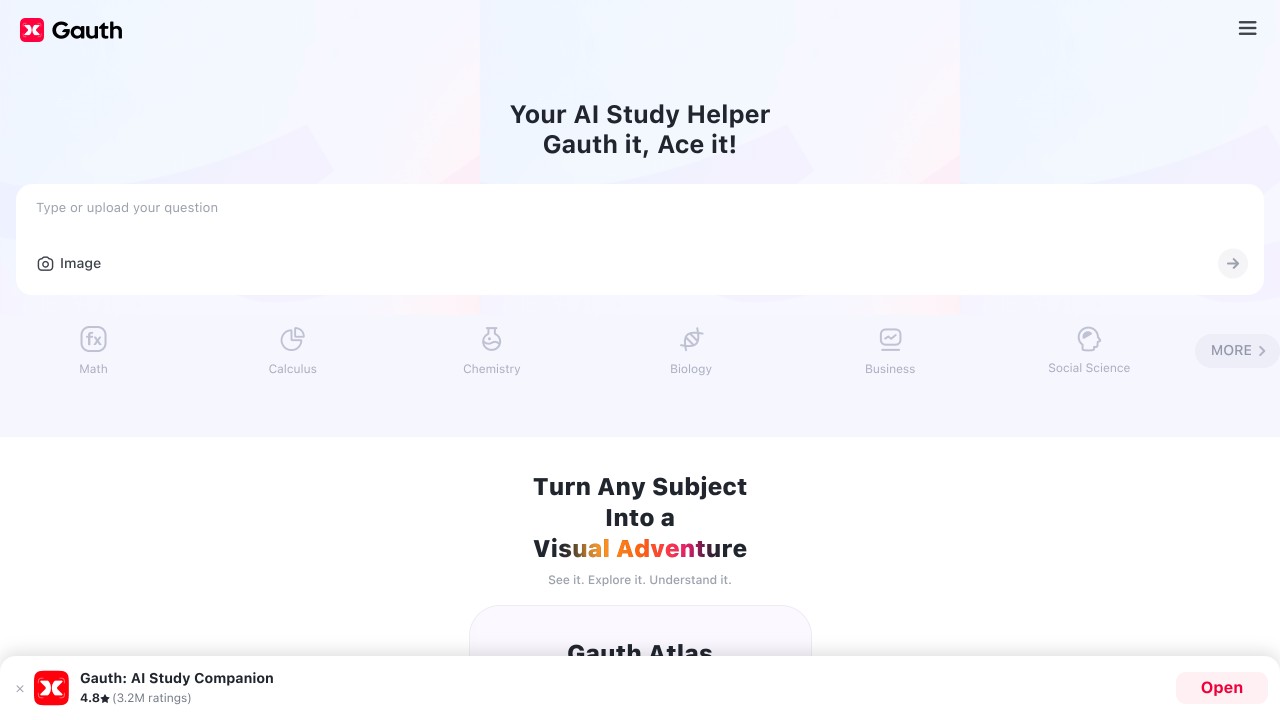
PolyAI’s homepage as captured for an earlier version of this article in September 2025.
PolyAI builds voice agents that pick up customer calls. SiliconANGLE reported in December 2025 that it raised $86 million at a $750 million valuation, naming Pacific Gas and Electric, UniCredit and Caesars among its clients. If a very human-sounding assistant has taken your restaurant booking or an outage report, it may have been one of theirs.
Its compliance page lists ISO/IEC 27001 certification, SOC 2 Type II, the UK’s Cyber Essentials and Cyber Essentials Plus, GDPR, and HIPAA and PCI DSS measures where they apply. That page is what most “poly ai compliance policy” searches are looking for. It’s written for business buyers, and the part that concerns you as a caller sits in the privacy notice instead.
That notice, last updated 9 April 2026, is where the caveat lives. PolyAI handles your call mainly as a processor for the company you rang. Where that company and the law allow, it also analyses recordings and extracts voice snippets for model training, and it keeps that material until the training or evaluation is done, with no fixed end date. To object or ask for deletion, start with the company you called; PolyAI also lists [email protected].
We searched for lawsuits naming PolyAI on 13 October 2026 and found none. Nothing we read suggests a caller should avoid it. If you’d rather your voice didn’t feed a training set, ask for a human agent.
Comparing it with other character apps
No companion app we’ve reviewed is spotless, so compare the specifics before you pay. Candy AI’s refund window is only 24 hours, Perchance’s plain-English privacy notes and its formal policy say different things, and Venice AI keeps chats in your browser while warning that some model providers may store them. PolyBuzz’s weak spots are its age gate and its contradictory labels; weigh those against the others’ before choosing.
FAQs
Is Poly AI safe for kids?
No. PolyBuzz, the chat app most people mean by Poly AI, is rated 18+ on the App Store and Mature 17+ on Google Play, and its own policy bars anyone under 18. Outside the UK, the only age check is a date of birth the user types in.
Is the Poly AI app legit?
Yes. PolyBuzz is a real app from Cloud Whale Interactive Technology with more than 50 million Android installs. Its problems are privacy labels that contradict each other and a strict no-refund rule, not fraud.
Is Poly AI completely private?
No. PolyBuzz’s privacy policy says it collects the text you type, photos you upload, device data and, if you allow it, precise location and your contacts. It also shares data with service providers, including ChatGPT’s platform, and with ad networks, so keep anything sensitive out of your chats.
How do I cancel a Poly AI subscription?
Cancel through whoever bills you. On an iPhone that’s Settings, your name, Subscriptions; on Android it’s Google Play, Payments and subscriptions. PolyBuzz’s terms say payments aren’t refunded after you cancel, so do it before the period ends.
What is PolyAI’s compliance policy?
PolyAI, the voice agent company, publishes a compliance page listing ISO/IEC 27001, SOC 2 Type II, Cyber Essentials Plus and GDPR, plus HIPAA and PCI DSS measures where relevant. Its privacy notice of 9 April 2026 explains how it handles recordings of people who call its business clients.